No-code / low-code
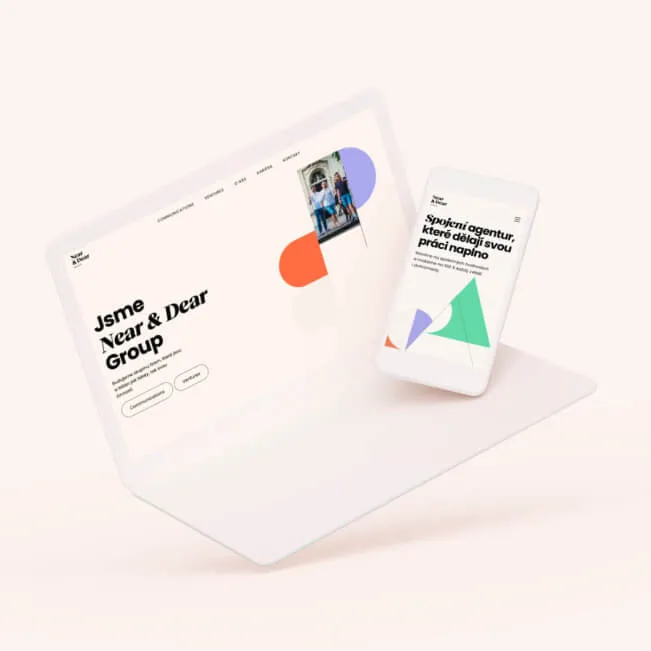
No-code and low-code are platforms and tools that let you build websites, apps, and automations with little or no programming knowledge. You assemble functionality visually—by dragging and dropping components, setting up logic in a graphical interface, or connecting services without writing a single line of code. The best-known platforms include Webflow (websites), Bubble (web apps), Zapier (automation), and Airtable (databases and workflows).
No-code and low-code platforms are fundamentally changing how companies approach software development. Their growth is backed by data from several independent sources:
- The market is growing exponentially: Gartner forecasts that the global market for low-code development technologies will reach $44.5 billion in 2026, with 19% year-over-year growth. It is expected to grow to $58.2 billion by 2029 (Gartner – Forecast Analysis: Low-Code Development Technologies, Worldwide)
- 75% of new apps will be low-code: according to Gartner, by 2026 three-quarters of new enterprise applications will be built on low-code or no-code platforms—up from just 25% in 2020. And 80% of the users of these tools will come from outside IT (Gartner – Forecasts on Low-Code Development Market)
- 87% of enterprise developers already use low-code: in its research on the low-code and digital process automation market, Forrester found that the vast majority of enterprise developers include low-code platforms in their workflow. It estimates the combined low-code and DPA market will approach $50 billion by 2028, growing 21% a year (Forrester – The Low-Code Market Could Approach $50 Billion By 2028)
- The developer shortage is real: based on a survey of 40 executives across sectors, McKinsey found that 60% of companies cite a lack of tech talent as the main barrier to digital transformation. Only 16% of managers are satisfied with the number of available tech professionals (McKinsey – Tech Talent Gap)
No-code and low-code tools address this problem by enabling so-called citizen developers—employees without formal IT training—to build solutions on their own that used to require a team of developers.
FAQ
What is the difference between no-code and low-code?
No-code platforms (e.g., Webflow, Zapier) are designed so that you don’t need to know any programming language—everything is configured visually. Low-code platforms (e.g., OutSystems, Mendix) offer a visual interface but also let you write code by hand for advanced features. Gartner distinguishes between the two categories in its Magic Quadrant evaluations, but the trend is toward them gradually merging—modern platforms often offer both in one environment.
Are no-code websites high quality, or are they a compromise?
It depends on the platform. Webflow, for example, generates clean, production-ready HTML, CSS, and JavaScript that performs on par with hand-written code. Unlike template-based site builders, it gives you full control over the design. According to the Forrester Wave evaluation, professional low-code platforms are fully fledged tools for enterprise development.
Will no-code replace traditional developers?
No—if anything, it expands the circle of people who can build digital products. McKinsey points out that demand for tech talent keeps growing despite the rise of AI and low-code tools. No-code frees developers from routine tasks so they can focus on complex problems that visual tools can’t handle.
Sources:
- Gartner – Forecast Analysis: Low-Code Development Technologies, Worldwide – market forecast of $44.5 billion by 2026, 19% CAGR
- Forrester – The Low-Code Market Could Approach $50 Billion By 2028 – analysis of the low-code and DPA market, survey of enterprise developers
- McKinsey – Tech Talent Gap: Addressing an Ongoing Challenge – survey of 40 executives, analysis of the tech talent shortage