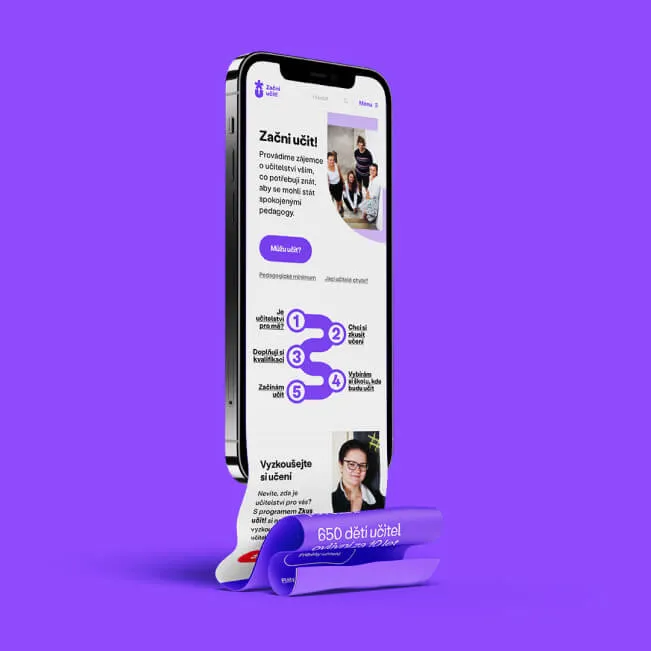
Copywriting
Copywriting is the craft of writing persuasive copy for marketing and advertising. It covers headlines, landing page copy, product descriptions, calls to action (CTAs), and email subject lines. Unlike everyday writing, copywriting always has a specific, measurable goal: getting the reader to act, whether that means clicking, signing up, or buying.
Copywriting directly affects conversions and business results. Copy quality is one of the easiest website success factors to measure:
- Simpler copy converts significantly better. In its Conversion Benchmark Report (an analysis of 41,000 landing pages and 464 million visitors), Unbounce found that pages written at a 5th–7th grade reading level convert at 11.1%, which is 56% higher than pages written at an 8th–9th grade level (Unbounce – Conversion Benchmark Report, 2024)
- 79% of users only scan web copy. In its eye-tracking research (3 studies over 13 years, more than 500 participants, 750+ hours of testing), Nielsen Norman Group showed that users read in an F-shaped pattern. Copy written for scanning improved measured usability by 124% (NNGroup – How to Write for the Web)
- Personalized CTAs convert 202% better than generic versions. HubSpot analyzed more than 330,000 CTAs over six months and found that copy tailored to visitor behavior achieves conversion rates of 25–45% (HubSpot – Personalized CTAs Research, 2024)
- Email readability drives replies. A Boomerang study of 40 million emails showed that emails written at a 3rd grade reading level achieved a 53% response rate, 36% higher than emails written at a college reading level (Boomerang – Email Response Research, 2016)
FAQ
What is the difference between copywriting and content marketing?
Copywriting focuses on direct action: a click, a purchase, a sign-up. Content marketing (articles, podcasts, videos) builds trust and awareness over the long term. In practice, the two overlap: even a blog post needs a persuasive headline and a CTA. Unbounce data shows that the optimal length of landing page copy is 250–725 words, with a median conversion rate of 3.8% (Unbounce – Conversion Benchmark Report, 2024).
How do you write website copy that works?
NNGroup research is clear: write concisely, break text up with one idea per paragraph, lead with the conclusion (the inverted pyramid), and highlight keywords. Combining concise, scannable, and objective copy improved usability by 124% compared with a promotional style (NNGroup – How Users Read on the Web).
Does the subject line matter in emails?
A great deal. A Boomerang analysis (40 million emails) showed that subject lines of 3–4 words achieve the highest open rates. According to HubSpot, personalized subject lines increase open rates by at least 26%. The same principle applies as with web copy: plain language and a concrete benefit for the reader lead to better results.
Sources:
- Unbounce – Conversion Benchmark Report (2024) – analysis of 41,000 landing pages and 464M visitors; impact of readability and copy length on conversions
- NNGroup – How to Write for the Web (1997) – study of 51 participants testing 5 versions of a website
- NNGroup – How People Read Online (2020) – 3 eye-tracking studies, 500+ participants
- HubSpot – Personalized CTAs Research (2024) – analysis of 330,000+ CTAs over 6 months
- Boomerang – Email Response Research (2016) – analysis of 40 million emails